Pro Photographer Secrets: Translating Focal Lengths (85mm, 35mm) into AI Prompts
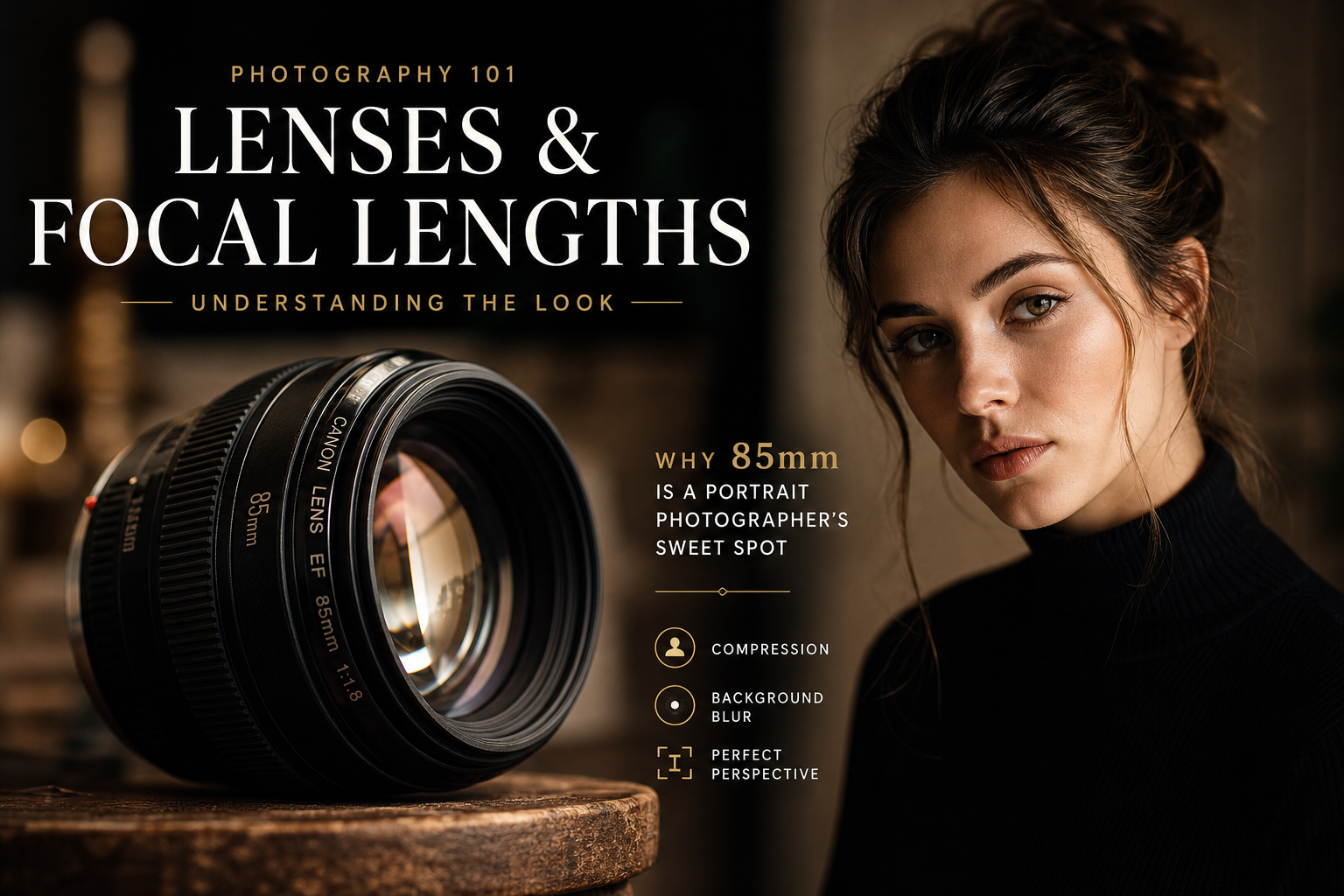
Two photographers shoot the same face from the same spot, one with an 85mm lens, one with a 35mm, and produce completely different emotional images. Focal length is one of the most powerful, least-used levers in AI photography. Most creators never mention it, then wonder why their portraits feel flat or their faces look subtly distorted. Learn what each lens actually does to space and you can prescribe the exact look you want.
Compression, Bokeh, and the 85mm Look
Longer focal lengths like 85mm and 135mm compress space, they flatten the distance between subject and background, making the subject feel close, isolated, and flattering. Paired with a wide aperture (f/1.4 to f/2), they melt the background into creamy bokeh that separates your subject from clutter. This is the classic beauty and portrait look, and you summon it by naming the lens and the aperture explicitly.
85mm Portrait: portrait shot on an 85mm f/1.4 lens, shallow depth of field, creamy circular bokeh, compressed background, subject isolated from a soft blurred backdrop, flattering perspective, sharp eyes
Context, Distortion, and the 35mm Look
Wider focal lengths like 35mm do the opposite, they expand space, keep more of the environment in focus, and place the subject within a story. They feel natural and immersive, which is why they dominate documentary and environmental portraiture. The trade-off is distortion: get too close with a wide lens and noses enlarge and faces stretch. Keep the subject at a sensible distance and the 35mm gives you honest, contextual images.
35mm Environmental: environmental portrait shot on a 35mm lens, deep focus, natural perspective, subject framed within their surroundings, subject 2m from camera to avoid wide-angle distortion, documentary feel
Sculpting With Chiaroscuro
Lens choice sets the space; light sets the drama. 'Volumetric chiaroscuro', strong contrast between a single key light and deep shadow, adds three-dimensional sculpting that makes any focal length feel intentional. Combine an 85mm with chiaroscuro for moody, gallery-grade portraits where the subject emerges from darkness.
- Use 85 to 135mm to compress and flatter; reserve it for beauty and portraits.
- Use 35mm to add context; keep subjects about 2m away to avoid distortion.
- Open up to f/1.4 to f/2 for bokeh; stop down to f/8 for sharp product detail.
- Add 'volumetric chiaroscuro' plus a single key light for dramatic depth.
- State subject distance to guide perspective and background compression.
Focal length is a creative decision, not a technicality. Decide whether you want to compress and isolate or expand and contextualize, name the lens and aperture, then sculpt with light. Build an 85mm and a 35mm recipe into your Manus workflow and you'll never ship a flat portrait again.